
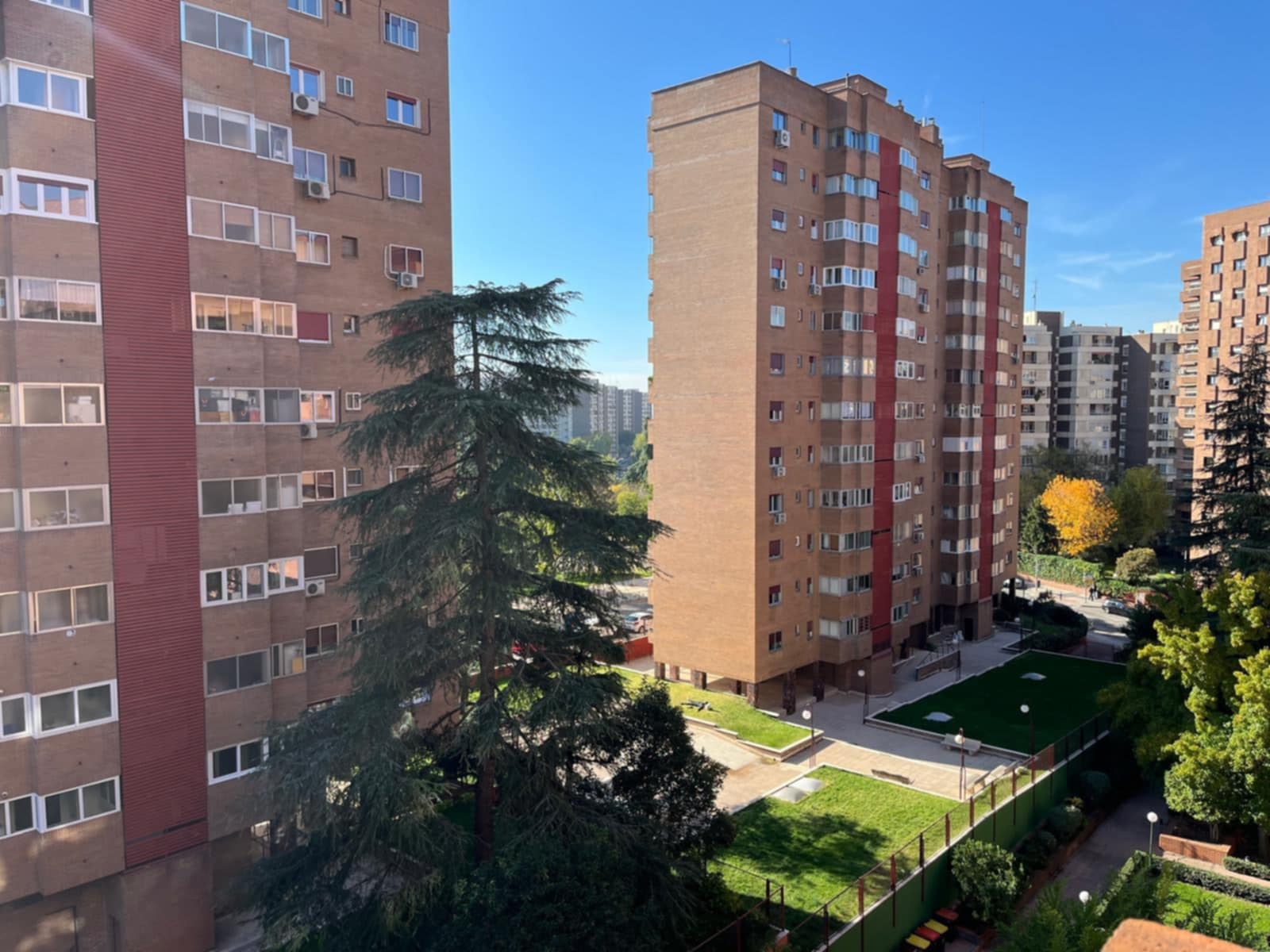
What to know when apartment hunting in Madrid (DNV/NLV families)
A typical 2-bedroom, 2-bathroom apartment in Madrid costs around €1,600/month, and it can easily reach €2,000 depending on the neighborhood, size, and whether parking is included.
For context, we ended up renting a 115 sqm apartment for €1,800/month with parking. We chose it because it was close to our kids’ school, near a shopping center, quiet, and—most importantly—spacious.
But this wasn’t our first apartment.
Our first rental was a total bust. We dealt with a long list of problems: mold, poor insulation, and high electricity costs. The apartment itself was only about 60 sqm, and it was actually a portion of a larger property that the owner had split into two units.
The biggest issue was the lack of transparency. We had our own electricity meter, but the owner did not have a separate meter for their portion. That meant we were sharing the bill with the owner—and somehow we almost always ended up paying the lion’s share of the electricity.
I’m sharing what I learned so you don’t repeat the same mistakes.
1) Expect more demand than supply
Madrid rentals are competitive. Many people apply for the same unit, so landlords can be selective and listings move fast.
What to do
- Contact listings the same day they’re posted. On Idealista, filter for listings posted within the last 24 hours.
- Have your documents ready before you request a viewing, because the “best” units often go to the first people who can submit a complete set. One landlord I talked to informed me that he was convinced I was serious about the property when I immediately submitted the documents he asked for quickly.
2) Many apartments are agency-controlled (and requirements are strict)
A lot of landlords use agencies, and agencies tend to follow rigid requirements.
A common requirement is Spanish payslips (nóminas). If you don’t have them, agencies may require one of the following:
- A guarantor (avalista) who will sign with you
- Often expected to have an EU employment contract and monthly income above €4,000 (this varies, but it’s a threshold you’ll hear a lot).
- Rent default insurance (seguro de impago)
- You’ll need to meet the insurer’s conditions to be approved.
What to do
- Before scheduling a viewing, ask directly:
“¿Piden nóminas? ¿Hay seguro de impago? ¿Aceptan avalista?”
This prevents wasted viewings. - If possible, prioritize units where you can deal directly with the owner. In our experience, owners typically have fewer requirements and are more open to negotiation than agencies.
- Agency Fee
To attract clients some agencies promise that they will not charge the owners for agency fee. These agents pass their fees to the tenants.
What to do
- Before viewing ask the agency as who pays for the agency fee.
4) Mold and insulation issues
Some apartments develop mold, especially when winter starts. Poor insulation and condensation are usually the main causes.
What to check during viewings
- Corners of bedrooms and bathrooms
- Around windows
Heavy condensation during winter is a strong sign of high humidity, which often leads to mold. - Behind wardrobes / inside closets
- Smell
A musty odor is a red flag.
4) Contract length and penalties
Some landlords want a long commitment (often described as 3 years, sometimes 5). The key question is what happens if you need to move early.
What to do before signing
- Confirm the minimum stay (often 6 months is a common “no-leave-before” point).
Make sure the contract allows you to leave after that minimum period—even if there is a penalty clause. - Check the early termination penalty clause. Some contracts include a penalty such as one month per remaining year (details depend on the exact wording).
- Ask for the clause in writing, and read it carefully before paying anything.
In Madrid, rent depends mainly on location, size, condition (renovated vs. old), and whether it has things people pay extra for (elevator, A/C, terraza, concierge, parking).
What you can realistically expect (as a rule of thumb):
More central / inside the M-30 (Salamanca, Chamberí, Centro, Retiro): usually the highest € per m². You pay for walkability and shorter commutes.
Well-connected but slightly out (Tetuán, Arganzuela, parts of Carabanchel, parts of Ciudad Lineal): often better “value” if you choose streets carefully and stay near Metro/Cercanías.
Family-focused areas (Chamartín, Hortaleza / Sanchinarro / Las Tablas, Montecarmelo, parts of Pozuelo/Tres Cantos outside Madrid city): more space, more calm, often newer buildings—but it can still be pricey in the “prime family” zones.
Further out / commuter towns (Getafe, Leganés, Alcobendas, San Sebastián de los Reyes, etc.): typically more space for the money, but you trade time and transport planning.
How I guide people to pick a “worth it” neighborhood:
Start with commute reality, not vibes: choose areas where you can reach your daily destinations in 30–45 minutes door-to-door. For example: School. Kids will go to school 10 months in a year. Make sure you pick an apartment where you can have a lot of options when it comes to schooling.
Pick your non-negotiables: elevator, natural light, heating/AC, noise level, proximity to Metro. During the winter season, it can get really cold, make sure you have appropriate heating. In the summer, it can get really hot, try to make sure you also have A/C
If you have kids: prioritize school logistics (catchment options, commute, after-school activities) and parks + safety + walkability.
Simple budgeting tip:
Many landlords/agents want the household income to be around 3x the monthly rent (varies, but it’s a common benchmark). If you’re near the edge, expect requests like extra guarantees.
In Madrid, most rentals—especially through agencies—follow a “prove you can pay” checklist. The exact combo varies by landlord, but these are the usual things they ask for:
What they commonly request
ID: Passport + NIE/TIE (if you have it). If you don’t yet, some will still proceed with a passport, but it depends.
Proof of income (this is the big one):
Últimas nóminas (usually 2–3 payslips)
Contrato de trabajo (often they like indefinido)
If autónomo: alta de autónomo, recent tax filings (Modelo 130/131, Modelo 303 if applicable), and/or accountant certificate. (Some agents ask for this)
Bank proof:
Recent bank statements
Sometimes proof of savings balance
Work/HR letter (optional but powerful): confirming role, salary, and stability (even better if in Spanish)
Previous rental proof (sometimes): references or proof you’ve paid rent consistently
The “payment / guarantee” structure you’ll see
Fianza (deposit): usually 1 month for residential rentals (standard).
Garantía adicional: often 1–2 extra months, sometimes more.
Seguro de impago (rent default insurance): many agencies push this. The insurer then applies its own criteria (income ratio, contract type, etc.).
Aval bancario (bank guarantee): strong option if you can get one; not everyone can, and banks may require funds/conditions.
If you’re new in Spain (no nómina yet), here are practical ways people still get approved
1) Use an “expat-style” file: make it easy to say yes
Prepare a clean PDF pack:
Passport + NIE/TIE (or proof you’re in process)
Employment contract abroad + salary proof
3–6 months bank statements (showing consistent income + savings)
A short cover letter explaining who you are, why Madrid, length of stay, and that you’re stable/reliable (this matters more than people think). Note: Agencies really consider your profile. So, take this seriously. In our case, the landlord even asked for our LinkedIn Profile and examined our work carefully.
2) Offer a stronger guarantee (within reason)
Depending on your situation:
Pay more months upfront if legal/acceptable (some landlords like it; some agencies/insurers won’t).
Offer extra garantía adicional.
If possible, propose aval bancario.
3) Target listings that are more flexible
In general, newcomers do better with:
Direct-to-owner listings (less insurer-driven). Note: This is my preferred method of looking for apartments. While there is probably less than 3% listings posted by direct owners, it will be worth your time to directly communicate with the owner. They have less requirements. Of course, you will be communicating directly with the one who will make the final decision.
Landlords who explicitly mention “expats welcome”
Temporary rentals (media estancia) while you build your Spanish paper trail (then switch to long-term once you have nóminas)
4) Use timing and speed as your advantage
Madrid moves fast. You’ll win units by being:
Ready to view immediately
Able to submit documents the same day. Note: One landlord I talked to said, he appreciated the fact that I sent the documents as soon as he asked them as it manifested that I was serious with the apartment.
Clear about move-in date and payment readiness
What I tell newcomers as a realistic expectation
If you don’t have Spanish nóminas yet, you’re not “unrentable”—but you often need either:
a strong financial profile (income + savings), or
a strong guarantee (aval / extra deposit / insurer acceptance), or
a temporary rental first.
Here are the issues that most often bite people in Madrid—especially newcomers—and what to do about each one.
Red flags (walk away or slow down)
They won’t show the apartment in person (or won’t do a live video tour).
Scams love “I’m abroad, send a deposit to reserve.” In Madrid, real apartments get shown—fast.Pressure to pay a “reservation fee” before you’ve seen anything or before you’ve received a proper contract.
Some agencies do reservation payments legitimately, but you should only pay when you have written terms, clear refund rules, and verified the agent/agency.Price is “too good” for the area + photos look like a hotel.
If it’s far below market, assume it’s bait until proven otherwise.The listing is vague about utilities, heating, and building condition.
Older buildings can mean noise, weak insulation, or expensive heating.They avoid answering basic questions like: what’s included, how is heating powered, who pays community fees, what internet options exist, etc.
Hidden costs & “surprises” (very common)
Utilities not included: electricity, gas, water, internet can add up—especially with electric heating or heavy A/C use.
Heating type matters a lot:
Gas (caldera) often behaves differently cost-wise than electric (especially in winter). Note: In my experience, I feel its cheaper using gas for heating.
Ask if it’s individual or central heating, and what months central heating is turned on.
Community fees (gastos de comunidad):
Often paid by the landlord, but don’t assume—confirm in writing.Furniture vs. “semi-furnished” confusion:
Some places have appliances but not beds/sofas; others look furnished in photos but key items are missing.Noise and light:
Street-facing units can be loud. Ground floors can be dark. Interior patios can be quiet—but sometimes low light.Agency fees:
Rules and market practice can vary, and it can be confusing. Don’t assume “free”—ask clearly: Who pays the agency fee, and how much? Note: Some landlords want you to pay the agency fee while some are okay with you splitting the agency fee.Condition at move-in:
Without a proper inventory and photos, you can get blamed for pre-existing damage. Note: Try to take photos/videos before the move in to avoid paying for those minor damages on the apartment
If you’re in Madrid (city), you have 3 clean, legal options for getting rid of old mattresses and bed frames—and they’re usually free if you use the municipal services:
Option 1: Book the city’s free bulky-item pickup (best for mattresses + bed frames)
Madrid has a free service for muebles y enseres (bulky waste). You request a pickup and they tell you the day/time and how to leave it out. You can request it via 010, the Madrid Móvil app, or the city’s online channels.
Also, Madrid has a scheduled monthly pickup day by district/barrio (a fixed day each month).
My tip: Don’t just leave it on the street on a random day—use the scheduled day or a booked pickup so you don’t risk a fine.
Option 2: Take them to a Punto Limpio (if you have a car/van)
Madrid’s fixed recycling centers (Puntos Limpios Fijos) accept bulky items like colchones (mattresses), somieres, and bed frames (as “residuos voluminosos y enseres”). They list an admissible quantity for households (e.g., up to 5 units for bulky items).
They also publish opening hours for these facilities.
Check the nearest Punto Limpio in your district.
Option 3: Donate or give away (if they’re usable)
If the mattress/bed frame is in good condition, you can:
Post for pickup on Wallapop / Facebook Marketplace / local expat groups
Donate via charities that accept furniture (availability changes—some only take furniture, not mattresses)
This is great when it’s clean and still usable, but many places won’t take used mattresses, so confirm first.
Option 4. Purchase from Ikea or any other furniture shop and the provide pickup service.
When we purchased new bed frames and mattresses, we paid for a minimal amount for pickup of the old bed frames and mattresses. Ikea outsources the pick-ups so we had to reschedule about 3 times before it was actually picked-up. Make sure the mattresses are wrapped. We wrapped them using the bubble wrap we bought from Alcampo